Faster research was the starting point. New thinking was the outcome.
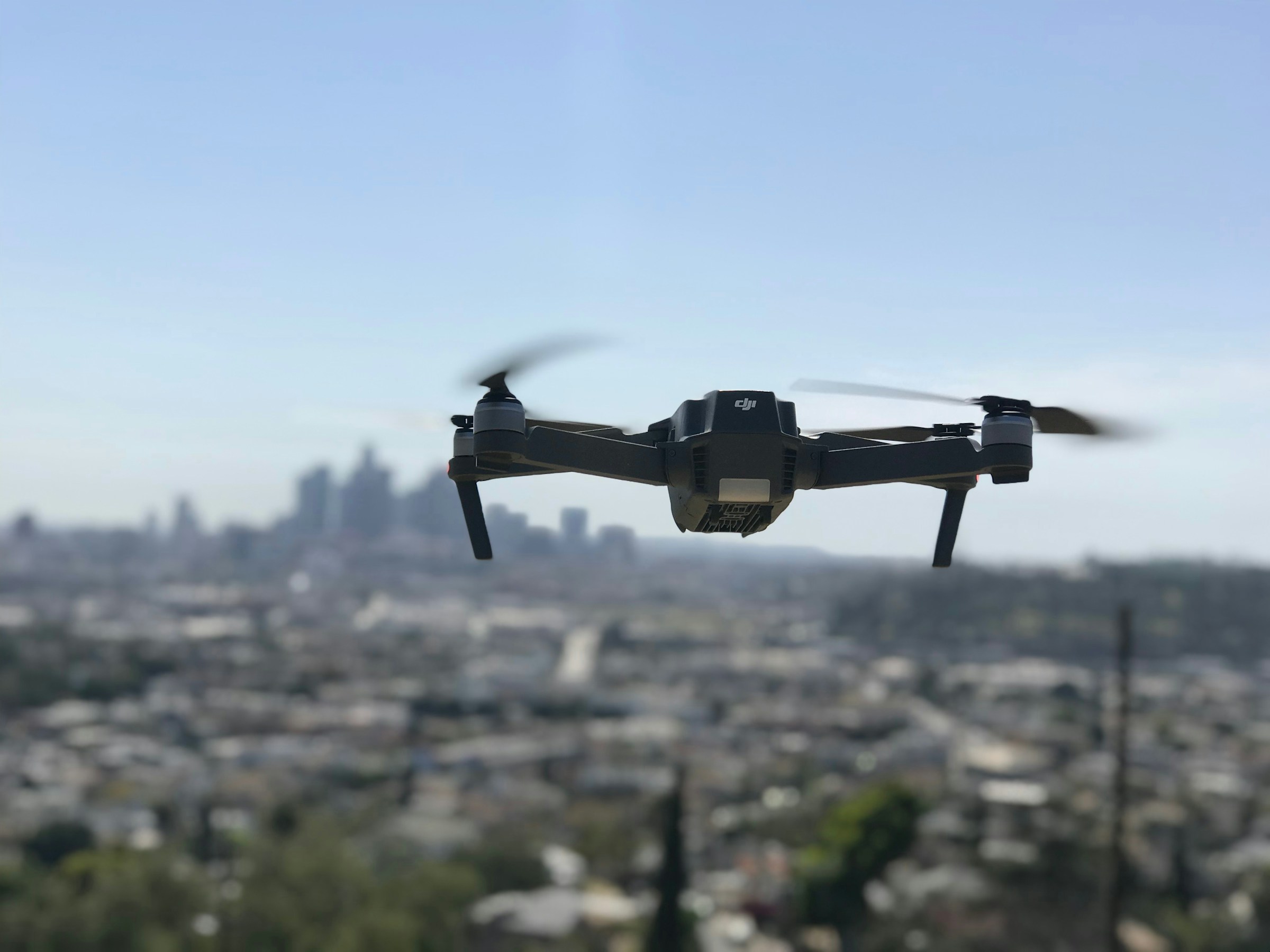
Urban Airspaces is building the software that will help cities manage low-altitude airspace: the coming reality of delivery drones overhead and the infrastructure nobody has quite figured out yet. Mark McLauchlan came to Future Workshops wanting to get more out of AI for market research. He left doing things with his business he hadn't thought possible.
II — WHERE THEY STARTED
Mark was already using AI. But the outputs weren't trustworthy enough to act on. Key markets were missing. Sources were vague or absent. Every time he needed a report, he started from scratch, and what came back felt more like a reflection of what he'd already told the tool than independent intelligence.
The framing, though, was the deeper problem. Mark thought he needed a better report. What he actually needed was a way to keep his team continuously current in a market that moves fast and matters enormously for credibility. Those are different problems, and solving the first one wouldn't have got him to the second.
III — HOW FUTURE WORKSHOPS COACHED
Future Workshops started where it always does: understanding the business. Before touching any tool or workflow, we worked with Mark to make sure Claude understood Urban Airspaces the way Mark does: its market, its voice, what it was trying to achieve, and what was actually at stake. We connected Claude to the tools and systems Mark's business already ran on, so the AI assistant wasn't something separate he had to go and use. It was present where the work was already happening. From that point on, every interaction Mark had with Claude carried that context. He stopped re-explaining himself. The outputs stopped being generic.
Then came the more important question. Not "how do we make the report better?" but "what does the team actually need?" The answer wasn't a document. It was continuous awareness. A way for everyone at Urban Airspaces to stay current with a fast-moving market, without anyone having to go looking. Once that was clear, the right solution was obvious. And because Mark now understood how to direct AI precisely, he could build it himself.
That's what Future Workshops coaching tends to produce: not just better outputs, but a clearer sense of the real problem and the capability to solve it. By the end of the engagement, Urban Airspaces' market intelligence ran on its own, every week, without anyone touching it.
IV — WHAT ACTUALLY CHANGED
The time saving was real. What had taken half a day of searching, reading and summarising now runs in minutes, with sources attached to every claim. But that's not the part of the story that mattered most.
Partway through the engagement, Mark found himself in a conversation with a potential partner about a policy question: the kind of complex, research-heavy territory that a small team simply doesn't have time to go deep on. He asked Claude to draft a thought piece. What would have been two weeks of work came back in minutes. He sent it. It opened doors.
That moment, turning a capability he'd built for internal use into something he could offer externally, wasn't the plan when the coaching started. It came from seeing what was now possible. That's what Future Workshops coaching tends to do: it doesn't just make existing work faster. It changes what a business believes it can do.
Coaching wasn't just helpful, it transformed how I use Claude.
Want this for your team?
Weekly 1:1 AI coaching from Future Workshops. Real progress every week.